

What to Look For in a Commercial Espresso Machine
When you purchase a commercial espresso machine, there are a number of factors to consider. The volume of your cafe's operations, service usage, and barista's expertise will determine which type of espresso machine is best for your business.
Double boilers allow you to brew while steaming. This cuts down on the time to recuperate between pulls. Proportional-integral-derivative (PID) temperature control manages on/off cycles for optimal boiler temperatures.
Productivity
A commercial espresso machine is able to handle a higher volume of coffee than a home machine. A home espresso machine would not be effective in a professional environment.
A commercial machine of high quality will be able serve up to 100 coffee cups every hour during peak hours. This is a huge benefit in busy workplaces, since it stops employees from having to wait around to get their coffee.
A coffee machine can also aid in bonding between workers. Teams of people usually have coffee in a rotating manner for each other, which can facilitate collaboration and teamwork within the workplace. A dedicated coffee area can help new employees feel more at ease in their workplace and reduce the barriers between them, the senior employees and other employees.
Commercial espresso machines are available in a variety of sizes to meet a variety of requirements. Some models are fully automatic, while others can pre-program espresso shot sizes so that operators don't have to guess the correct size. This is especially crucial for businesses with baristas who are not trained as the wrong shots can impact the strength and taste of espresso. It is also recommended to purchase commercial espresso machines made from ethically sourced materials that benefit the communities in which coffee beans are cultivated. This will ensure a premium quality product and minimize the negative impact on the environment.
Safety
Espresso machines are huge machines that weigh a lot that can cost more than a brand new compact car. The machines are designed to produce hundreds of drinks and shots in one day. These high volume operations can result in unique safety and health risks for employees, which is why it's crucial to think about the potential hazards that come with an espresso machine in a commercial setting.
Be aware that commercial espresso machines tend to use warm water. This can encourage the growth of bacteria. Unmaintained machines that are not descaled and cleaned regularly will accumulate spent espresso. This could cause it to turn rancid, and possibly cause illness if consumed by customers. A commercial espresso machine with steam wands that don't have an effective seal could allow for bacterial growth in the milk frothing process, as it might not be able temperatures that are sufficient to kill all bacteria.
Take into consideration the type of beverage you'll serve and the number of cups an hour can be served when choosing the right commercial coffee machine. It is important to select an espresso machine with automation capabilities which will allow you to serve your customers their preferred coffee drink. Also, look for a guarantee that covers parts and labor to ensure that any technical issues are solved quickly and efficiently.
Energy Efficiency
The power requirements of commercial espresso machines are significantly higher than home models. Professional espresso machines are more heavy and come with larger boilers to support multiple group heads in standard cafe production. These machines operate at a higher temperature and are usually placed in indoor areas (such as in a coffee shop or restaurant) where the electronic components could overheat.
The boiler of an espresso machine designed for commercial use is heated and holds water that has been pressurized by an electric pump. The water is then used for brewing and steaming espresso. The boiler is comprised of a number of copper tubes that are heated by electric elements. When the brew sensor detects that the water level has reached its target level, the solenoid valve opens and fills the boiler with new water. The heating element is then shut off.
There are four kinds of espresso machines. They are distinguished in their capacity to brew or steam the coffee: TB (brewing-only), TX (twin-boilers) HX (double automated) and DA (double automated). TB and TX machines offer stable brew temperatures, while DA offers rapid steaming from one boiler. HX machines are being used by many cafes as they offer the best in both steam and brew temperature.
Maintenance
Commercial espresso machines need regular maintenance just like cars. They require regular maintenance in order to run smoothly and efficiently. If you make the effort to keep your machine in top condition, it will give you a better tasting coffee and last longer.
It's a routine to clean your espresso machine, however it is important to be aware of those parts that require a deeper clean. There will be traces of coffee grounds and other milk products that could cause the machine to break down over time. Regular cleaning can prevent this from happening and helps keep your espresso machine working at to its maximum.
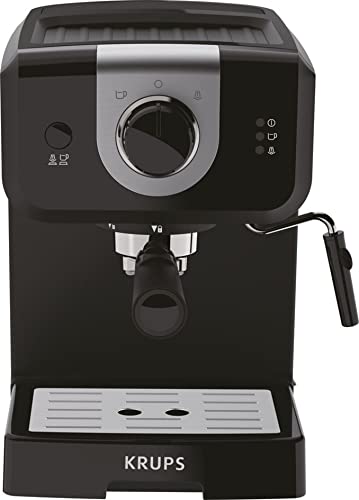
Most commercial espresso machines need descaling every three months. This procedure requires a few additional steps as opposed to normal cleaning. It is recommended to review your manual to ensure you follow the directions. Descaling involves using a solution to dissolves scale from the water tank. You'll need a container in order to finish this task. In some models there may be an additional container under the coffee spouts. Follow the instructions for the model you have chosen.
Another maintenance step includes changing the water filters. This is something that could easily be overlooked however it's essential to keep in mind so you don't end up with a build-up of mineral deposits. Also, you should look for calcification within the spray head, which can be difficult to eliminate.